What Is BRRR? A Beginner-Friendly Guide for Property Investors
Among property investors, certain strategies tend to appear again and again in conversations about portfolio growth. One approach that frequently surfaces is the BRRR strategy.
The acronym stands for Buy, Refurbish, Rent, Refinance, Repeat.
At first glance the term can sound like a piece of modern property jargon or a social media catchphrase. In reality, the underlying concept has existed for decades. Professional investors have used variations of this approach long before the acronym became popular.
The idea behind BRRR is relatively straightforward. An investor purchases a property that requires improvement, increases its value through refurbishment, rents it to tenants and then refinances the property based on its higher value. The capital released through refinancing can then help fund the next investment.
In many ways, the process resembles a flywheel rather than a one-off transaction. Once the wheel begins turning, the momentum of each completed project can help power the next.
However, like any mechanical system, the flywheel only functions if each component works correctly. Poor purchasing decisions, unrealistic renovation budgets or weak rental demand can quickly interrupt the process.
Understanding how the BRRR strategy operates in practice is therefore essential before attempting to apply it.

Why the BRRR Strategy Appeals to Investors
Property investment typically requires significant capital. Deposits, legal fees, stamp duty and renovation costs can accumulate quickly. Traditional buy-to-let investing often involves purchasing a property, renting it out and allowing both rental income and long-term price appreciation to generate returns over time. The BRRR strategy introduces a slightly different objective. Rather than allowing capital to remain tied up within a property for many years, investors aim to recycle part of their capital after increasing the property's value. If executed successfully, the same initial funds may contribute toward several properties over time. To visualise this, imagine capital as water moving through a system of reservoirs. In traditional buy-to-let, the water flows into one reservoir and remains there. In a BRRR model, the system is designed so that water can flow out again and refill other reservoirs. The strategy therefore appeals to investors who are focused on portfolio growth rather than simply owning individual assets. However, the attractiveness of the concept does not remove the need for careful analysis. Each stage of the process carries its own challenges and risks.Step One: Buying the Right Property
The first stage of the BRRR strategy involves purchasing the right property. This is often the point where success or failure is determined. A common misconception is that any inexpensive property can become a BRRR project. In practice, the key lies in buying below the property's potential future value. Properties that require refurbishment are often central to this strategy. These homes may appear unattractive to owner-occupiers because they require renovation work, yet they offer opportunities for investors who understand refurbishment costs and local property values. Across parts of the North-West of England, older housing stock remains common. Many terraced and semi-detached properties were constructed during the late nineteenth and early twentieth centuries. According to the English Housing Survey, around one third of homes in England were built before 1945, meaning a large proportion of the housing stock may benefit from modernisation. For investors, this creates opportunities where thoughtful improvements can increase both market value and rental appeal. Regional property prices also influence the feasibility of the BRRR strategy. Recent Rightmove data shows that the average property price in Manchester over the past year has been approximately £282,495, while Liverpool averages around £229,743. Elsewhere in the region, Warrington averages £296,286 and Chester approximately £299,560. Compared with London, where average property prices frequently exceed £500,000 depending on borough, these entry points can make value-add strategies more accessible. But price alone should never determine investment decisions. Location, tenant demand, transport links and employment growth remain fundamental considerations.
Step Two: Refurbishing to Create Value
Once the property has been purchased, the next stage involves refurbishment. The purpose of refurbishment is not simply to make a property look more attractive. It is to bridge the gap between the property's current condition and the standard expected by tenants and lenders. In many cases, relatively modest improvements can create meaningful value. Typical refurbishment work may include:- installing modern kitchens and bathrooms
- updating flooring and decoration
- improving insulation or heating systems
- replacing outdated fixtures and fittings
Step Three: Renting the Property
Once renovation is complete, the property is placed on the rental market. Rental income is not simply a bonus within the BRRR model; it plays a central role in the refinancing stage that follows. Mortgage lenders typically assess the viability of buy-to-let refinancing by reviewing expected rental income relative to mortgage payments. Across several North-West cities, rental markets remain active. According to Office for National Statistics data, the average monthly rent in Manchester reached £1,343 in early 2026, while Liverpool averaged approximately £885. Nearby towns such as Warrington and Chester recorded average rents of around £873 and £954 respectively. Rental demand is often shaped by employment opportunities and regional economic growth. The Cheshire and Warrington region supported more than 35,000 logistics jobs in 2021, illustrating the scale of employment within the area. Major employers including Amazon, GXO Logistics and Eddie Stobart operate facilities along the regional logistics corridor. Stable employment markets often translate into steady tenant demand, which helps support rental income and occupancy levels.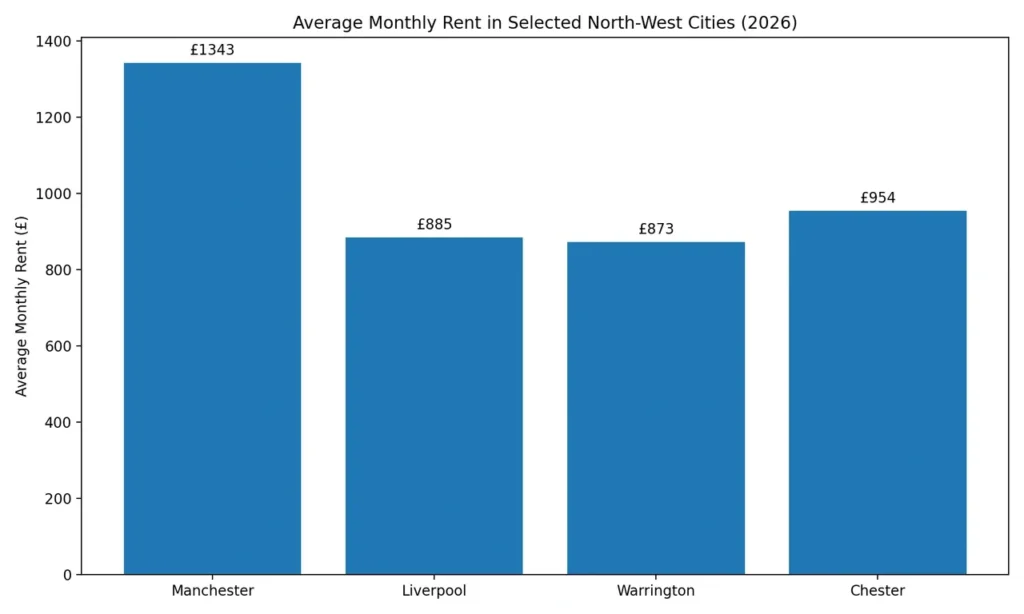
Step Four: Refinancing the Property
Refinancing represents the stage where the investor attempts to release capital from the property. Once the property has been refurbished and successfully rented, lenders may reassess its market value. Buy-to-let refinancing typically operates around a loan-to-value ratio of approximately 75%. This means lenders may be willing to provide a mortgage equivalent to 75% of the property's current valuation. If the property's value has increased significantly since purchase, refinancing may allow the investor to recover part of their original capital. Consider a simplified example:- Purchase price: £180,000
- Refurbishment cost: £20,000
- Total investment: £200,000
Step Five: Repeating the Process
The final step of BRRR is repetition. Once capital has been released through refinancing, it may contribute toward the deposit and refurbishment costs for the next property. Over time, this cycle can gradually expand a portfolio. However, the strategy should not be mistaken for a shortcut to rapid wealth. Property investment often resembles gardening more than speculation. Seeds must be planted, nurtured and given time to grow. Even when the BRRR model functions successfully, it still requires patience, discipline and careful financial management. As Warren Buffett once observed: “The most important thing to do if you find yourself in a hole is to stop digging.” In property investing, this translates to careful decision-making at every stage of the process.Understanding the Risks
Like all investment strategies, BRRR involves risks. Refurbishment projects can reveal unexpected structural issues once renovation begins. Costs can escalate if contractors encounter problems with plumbing, wiring or structural elements. Market valuations can also fluctuate. If the property is valued lower than expected during refinancing, less capital may be released than initially planned. Interest rate changes represent another important variable. Borrowing costs can influence mortgage affordability and overall project profitability. These factors explain why experienced investors emphasise due diligence before committing to a project. Detailed research into comparable property values, realistic renovation budgets and local rental demand helps reduce uncertainty.
Why Regional Markets Often Feature in BRRR Strategies
Regional markets frequently appear in discussions about BRRR investing because of their relative affordability. Across several North-West locations, property prices remain lower than those found in the capital. Average property prices currently stand at:- Manchester – £282,495
- Liverpool – £229,743
- Warrington – £296,286
- Chester – £299,560